Quick answer
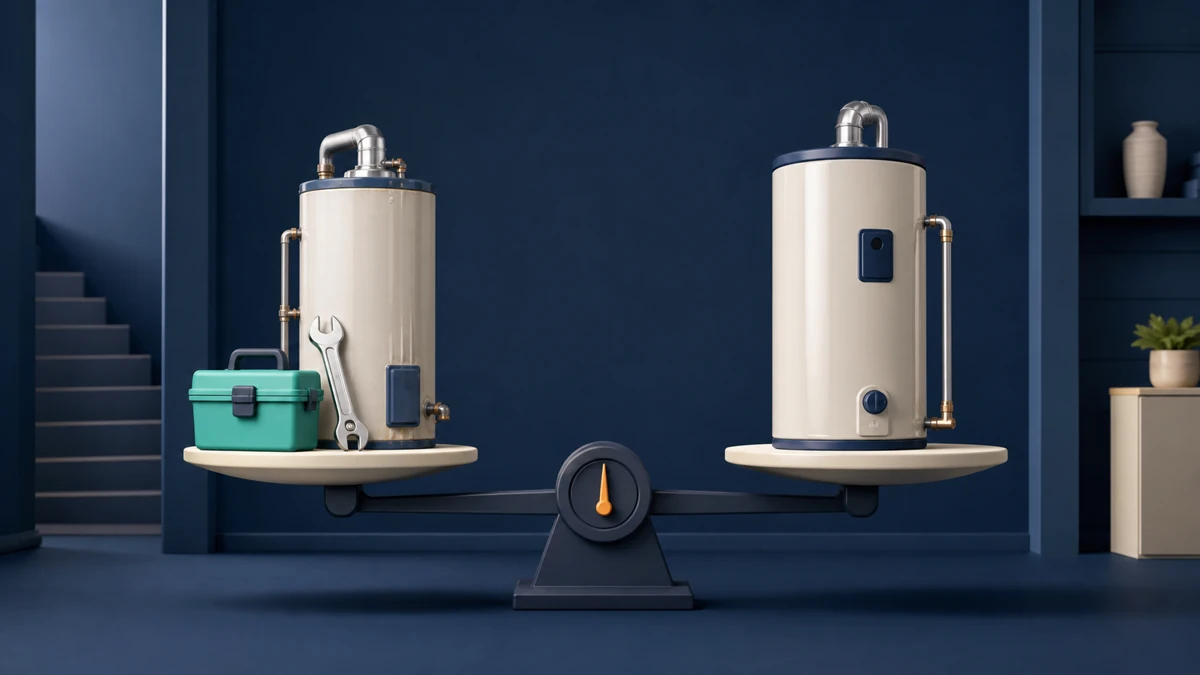
Repair can make sense when the tank is sound and a qualified technician identifies a replaceable component. Replacement is usually the practical path when the storage tank itself leaks, the unit has repeated failures, required parts are unavailable or the home needs a different capacity or fuel strategy. Do not work on gas, combustion or high-voltage equipment without appropriate training.
First: respond safely to leaks or combustion concerns
Water heaters combine water, heat, pressure and often gas or high-voltage electricity. If there is a gas odor, suspected combustion problem, active electrical hazard, severe corrosion or uncontrolled leak, follow the manufacturer and utility emergency guidance and contact a qualified professional.
Know the location of the water shutoff and the approved way to disconnect the unit’s energy source. Do not plug a temperature-and-pressure relief valve or attempt to stop a leaking tank with an unsafe temporary patch.
Problems that may be repairable
- Electric heating element or thermostat failure.
- Ignition, control or sensor problem that can be serviced safely.
- Replaceable valve, connector or localized plumbing leak outside the tank.
- Mineral buildup or maintenance issue that has not damaged the vessel.
- Venting or installation defect that can be corrected and brought into compliance.
A repair decision should include diagnostic cost, parts availability, labor warranty and the probability of another near-term failure.
Signs that replacement deserves serious consideration
- Water is leaking from the storage tank or tank seam.
- Corrosion is extensive or the unit has experienced repeated leaks.
- Repair costs are accumulating across multiple components.
- Hot-water capacity no longer fits the household.
- The unit cannot be installed or vented safely under current requirements.
- A planned remodel or electrification project changes the best equipment type.
Compare replacement types and constraints
Replacement choices can include conventional storage, heat pump, tankless and other fuel-specific designs. The best option depends on climate, household demand, available electrical service, gas or venting infrastructure, installation space, condensate drainage, noise tolerance and local code.
A high-efficiency model can reduce operating cost, but installation modifications can dominate the first-year budget. Request itemized quotes that separate equipment, permits, disposal, electrical or gas work, venting, drain work and warranty terms.
Use a lifecycle comparison, not the sticker price
Compare the complete installed cost with expected energy use, maintenance, available incentives and the likely time the household will remain in the property. Verify current federal, state, utility and local incentives before relying on them; eligibility can change and may depend on product certification and income.
Questions to ask the contractor
- What failed, and is the tank itself sound?
- Which code or installation upgrades are included?
- Will the new unit meet peak household demand?
- What electrical, gas, venting or drainage changes are required?
- What are the equipment, labor and tank-leak warranties?
- Who handles permits, disposal and inspection?
For broader replacement planning, review common home-system lifespans and the annual maintenance budget guide.
Frequently asked questions
Can a leaking water-heater tank be repaired?
A leak from a fitting may be repairable, but a leak from the tank vessel usually points to replacement. A professional should identify the source.
Is tankless always cheaper to operate?
Not automatically. Fuel price, usage, efficiency, installation and maintenance all affect the result.
Should I wait until the heater fails?
Waiting can increase the risk of water damage and an emergency purchase. Older or deteriorating equipment can be replaced on a planned schedule after professional review.
Research transparency
How this guide was prepared
This guide summarizes publicly available U.S. government, regulator or industry-source material listed below. It explains planning concepts and questions to verify; it does not provide a property-specific quote, inspection, coverage decision, legal opinion or tax advice.
Before assuming coverage, compare a home warranty with homeowners insurance; the products respond to different triggers.
Sources and references
- Water heating resources — U.S. Department of Energy
- Consumer water heaters — U.S. Department of Energy
- Home energy checklist — U.S. Department of Energy
Sources were checked for this guide on July 27, 2026. Policy terms, tax rules, insurance forms, incentives and local requirements can change.
General-information disclaimer
This guide is for general planning only. It is not a quote, policy interpretation, legal advice, tax advice, engineering advice or a substitute for a licensed professional who can review your property and documents.