Quick answer
For a pre-1978 home, assume painted surfaces may contain lead unless reliable testing shows otherwise. Hire an EPA Lead-Safe Certified firm when the federal Renovation, Repair and Painting rule applies, isolate the work area, control dust and complete the required cleaning and verification steps.
Why age of the home matters
The federal government banned consumer use of lead-based paint in 1978, so older homes are more likely to contain it. The probability generally increases with the age of the building, but appearance alone cannot confirm whether a layer contains lead.
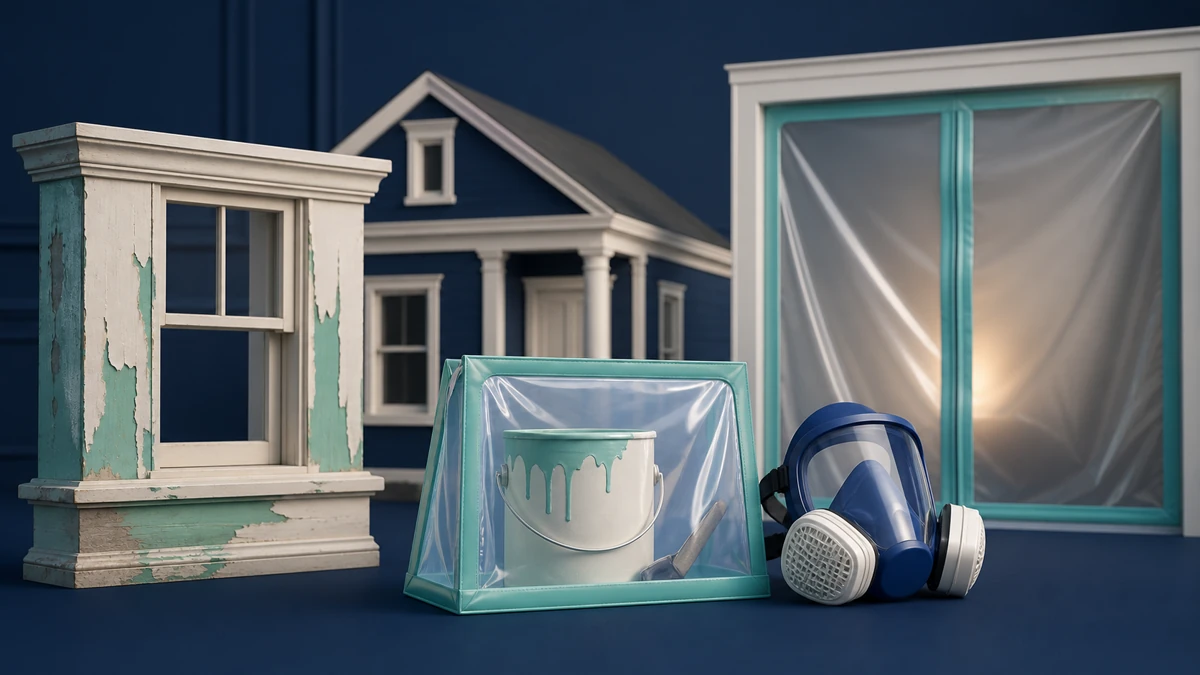
Lead hazards often come from deteriorating paint, friction surfaces such as windows and doors, impact surfaces and renovation dust. Intact paint can become hazardous when sanded, scraped, drilled or demolished.
Decide whether to assume or test
Homeowners can plan lead-safe work by assuming pre-1978 painted surfaces contain lead. A certified inspector or risk assessor can provide more detailed information about locations and hazards.
Consumer test kits have limitations, and EPA recognition for certain kits applies in defined professional contexts. Choose testing based on the decision it needs to support and local requirements.
Understand contractor obligations
For covered work in target housing and child-occupied facilities, firms generally must be certified and use trained renovators and lead-safe practices. State-authorized programs may administer their own requirements.
Ask for the firm’s certification, the required Renovate Right information, the work-area containment plan and how cleaning verification will be documented. A general remodeling license is not the same as lead-safe certification.
Control dust and protect occupants
Work practices focus on containing the area, minimizing dust, protecting floors and belongings, using appropriate tools and cleanup methods, and preventing contaminated debris from spreading through the home.
Children and pregnant occupants should be kept away from the work zone. Heating and cooling pathways may need to be isolated so dust is not distributed to other rooms.
Keep records after the project
Save testing reports, contractor certifications, notices, photographs and cleaning records. Disclosures can be relevant when selling or leasing many pre-1978 properties.
If lead exposure is suspected, contact a healthcare professional or public-health agency. This article addresses building planning, not medical testing or treatment.
Lead Paint Renovation Guide checklist
- Identify the construction year
- Assume lead unless reliable testing supports another plan
- Verify contractor lead-safe certification
- Review containment and cleanup methods
- Keep occupants outside the work area
- Save testing, disclosure and project records
Frequently asked questions
Can I paint over lead-based paint?
Proper encapsulation can be part of a management plan when surfaces are suitable, but loose paint and underlying moisture or friction problems must still be addressed.
Does every pre-1978 renovation require the same process?
No. Coverage, exemptions and work practices depend on the property, amount and type of disturbance, and federal or state rules.
Can I identify lead paint by color?
No. Lead content cannot be reliably determined from color or appearance alone.
Research transparency
How this guide was prepared
This guide summarizes publicly available U.S. government, regulator or industry-source material listed below. It explains planning concepts and questions to verify; it does not provide a property-specific quote, inspection, coverage decision, legal opinion or tax advice.
Sources and references
- Lead-safe renovation steps — U.S. Environmental Protection Agency
- How to tell whether a home contains lead paint — U.S. Environmental Protection Agency
- RRP program for consumers — U.S. Environmental Protection Agency
Sources were checked for this guide on July 27, 2026. Policy terms, tax rules, insurance forms, incentives and local requirements can change.
General-information disclaimer
This guide is for general planning only. It is not a quote, policy interpretation, legal advice, tax advice, engineering advice or a substitute for a licensed professional who can review your property and documents.