Quick answer
Do not sample or disturb a suspect material yourself. If an older material is damaged or will be affected by renovation, EPA recommends evaluation and sampling by a properly trained and accredited asbestos professional using a qualified laboratory.
Where suspect materials may appear
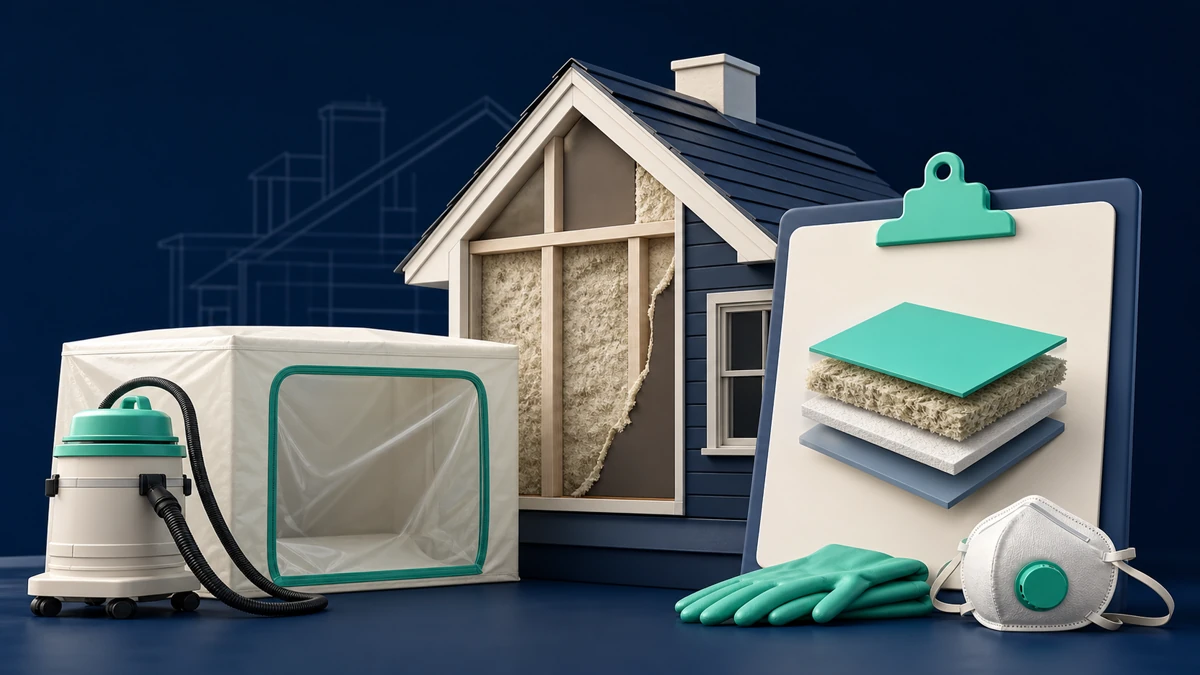
Historic products that may contain asbestos include some resilient floor tiles and mastics, pipe or boiler insulation, textured coatings, cement products, roofing, siding and other heat-resistant materials. Product age and type can raise suspicion but do not confirm content.
Renovation plans should consider layers hidden beneath newer finishes. A modern floor covering can sit over older tile or adhesive, and pipe wrap may be concealed in walls or mechanical rooms.
Why visual identification is not enough
Many asbestos-containing materials look similar to asbestos-free products. Labels and reliable records can help, but testing may be needed when the result changes the work plan.
Improper DIY sampling can release fibers and contaminate the area. An accredited inspector selects the sample location, limits disturbance and sends material to a qualified laboratory.
When leaving material in place may be reasonable
Intact material in good condition that will not be disturbed can sometimes be managed in place. The plan may include documentation, periodic inspection and controls that prevent drilling, sanding or impact.
Covering or enclosure can be appropriate in some situations, but it should not hide deterioration or create a future surprise for contractors. Record locations clearly.
Plan renovation and removal separately
If work will disturb confirmed or presumed asbestos-containing material, obtain a written abatement or management scope before general demolition begins. Contractor licensing, notifications, disposal and air-clearance rules vary by jurisdiction.
Separate the asbestos scope from reconstruction pricing so responsibilities are clear. Ask who controls the work area, how waste is handled and what documentation will be provided at completion.
Avoid high-risk homeowner actions
Do not sand suspect flooring, scrape old textured coatings, cut insulation or use an ordinary household vacuum on debris. Do not track dust through occupied areas.
If accidental disturbance occurs, stop work, restrict access and seek advice from the state asbestos program or a qualified professional. Avoid sweeping or dry cleanup that can spread fibers.
Asbestos Home Renovation Guide checklist
- Review building age and renovation history
- Identify materials that will be disturbed
- Do not collect DIY samples
- Use an accredited inspector and qualified laboratory
- Confirm local abatement and disposal rules
- Keep reports with permanent property records
Frequently asked questions
Can I tell asbestos by looking at tile or insulation?
No. EPA states that visual appearance alone generally cannot confirm whether a material contains asbestos.
Must every asbestos-containing material be removed?
Not necessarily. Intact, undisturbed material may sometimes be managed in place, depending on its condition and future use.
Is homeowner work exempt from every asbestos rule?
No. Federal, state and local requirements differ by activity and property. Confirm the rules before disturbance or disposal.
Research transparency
How this guide was prepared
This guide summarizes publicly available U.S. government, regulator or industry-source material listed below. It explains planning concepts and questions to verify; it does not provide a property-specific quote, inspection, coverage decision, legal opinion or tax advice.
Sources and references
- Asbestos concerns during remodeling — U.S. Environmental Protection Agency
- Protect your family from asbestos exposure — U.S. Environmental Protection Agency
- How to know whether home materials contain asbestos — U.S. Environmental Protection Agency
Sources were checked for this guide on July 27, 2026. Policy terms, tax rules, insurance forms, incentives and local requirements can change.
General-information disclaimer
This guide is for general planning only. It is not a quote, policy interpretation, legal advice, tax advice, engineering advice or a substitute for a licensed professional who can review your property and documents.