Quick answer
Start crawl-space moisture control outside: repair gutters, extend downspouts, correct negative grading and stop plumbing leaks. Inside, evaluate ground vapor, drainage, air sealing, insulation and humidity as one system. Do not install a dehumidifier as the only response to active water entry.
Find the source before choosing a product
Moisture may enter as rain or groundwater, plumbing leakage, soil vapor or humid outdoor air that condenses on cool framing and ducts. More than one pathway can be active at the same time.
Inspect during or soon after wet weather when possible. Note standing water, wet soil patterns, foundation staining, pipe leaks, disconnected ducts and the location of exterior downspouts and grade slopes.
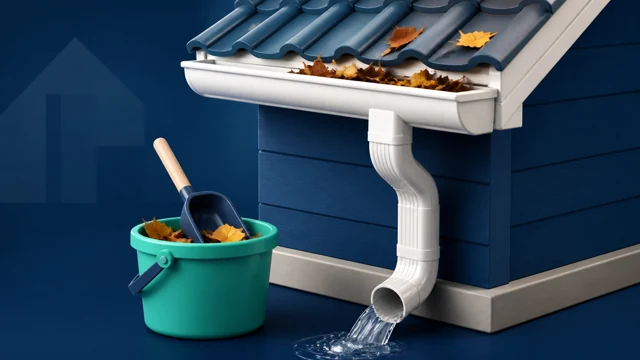
Control roof runoff and surface drainage
Gutters and downspouts should collect roof water and discharge it away from the foundation through a stable path. Soil should direct surface water away rather than creating a low area beside the crawl space.
Foundation drains, swales or other drainage systems may be needed where the site cannot be corrected with simple grading. Avoid burying a problem behind interior finishes before bulk water is managed.
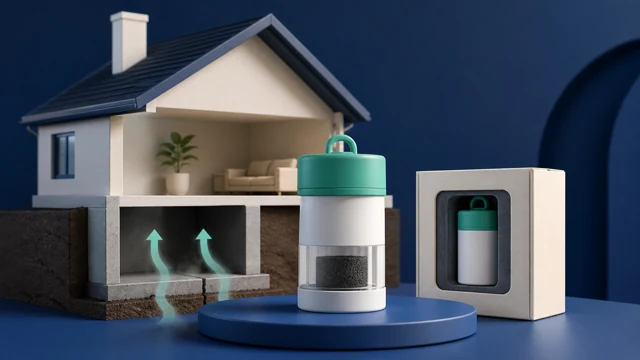
Manage moisture from the soil
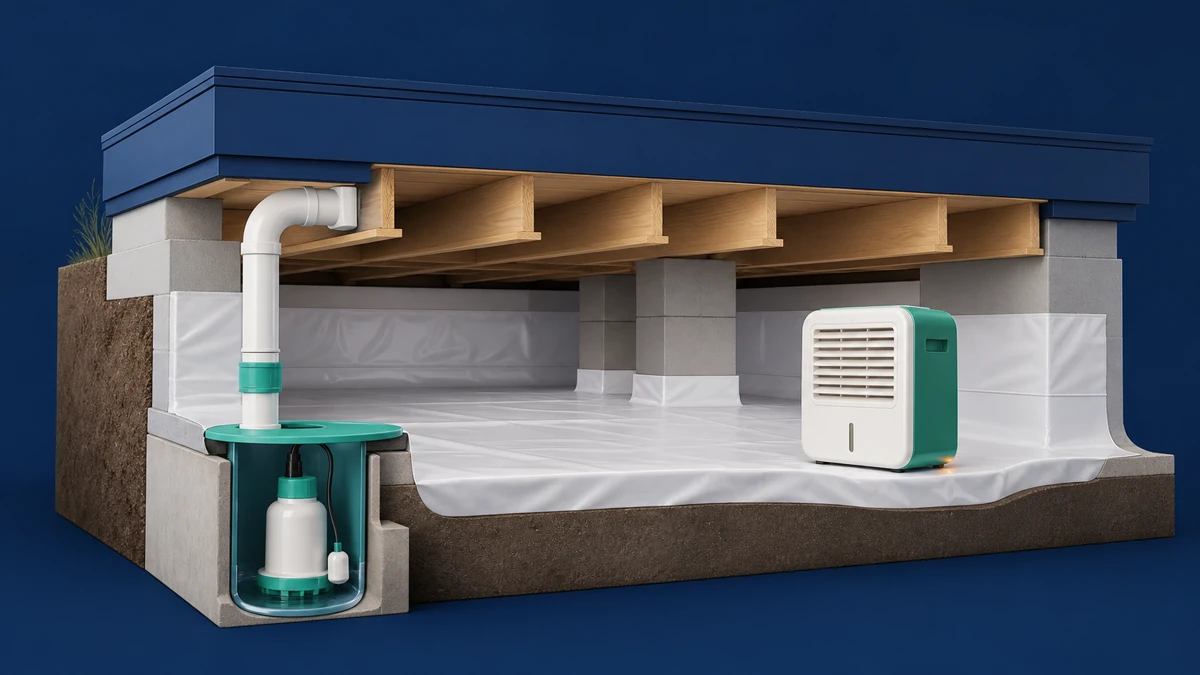
Exposed soil can release significant water vapor into the crawl space. A continuous ground vapor retarder, properly overlapped, sealed and extended as the design requires, can reduce this source.
Installation details depend on whether the crawl space is vented or conditioned, climate, radon strategy and local code. Mechanical equipment and combustion appliances can also affect the design, so professional building-science review may be appropriate.
Evaluate ventilation, air sealing and humidity together
Traditional vents do not solve every climate or building condition. Humid outdoor air can condense on cool surfaces, while an unvented conditioned design requires intentional air and moisture control.
Measure relative humidity and inspect wood moisture rather than relying only on smell. A dehumidifier can be useful after water pathways are controlled, but it needs drainage, maintenance and enough capacity for the space.
Repair damage and monitor results
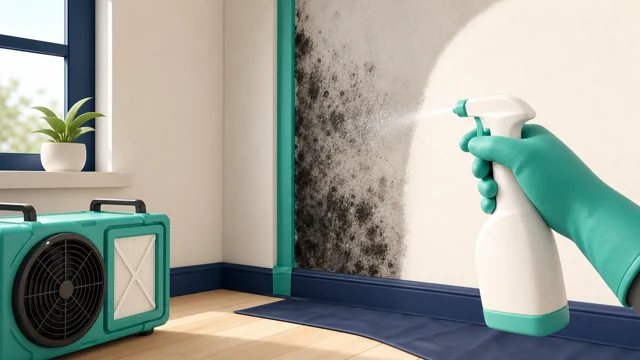
Wet insulation, fungal growth, damaged ducts, corrosion, pest activity or decayed framing may require separate remediation. Structural concerns should be evaluated by a qualified professional.
After corrections, monitor through wet and dry seasons. Keep photographs, moisture readings, invoices and drainage plans so future owners or contractors understand what was changed.
Crawl Space Moisture Control checklist
- Inspect during wet weather
- Clean and repair gutters
- Extend downspouts away from the foundation
- Correct plumbing and condensate leaks
- Evaluate ground vapor and humidity
- Monitor framing and odors after repairs
Frequently asked questions
Should crawl-space vents stay open?
The answer depends on climate, design, code and whether the space is intentionally conditioned. Do not mix vented and unvented strategies without a plan.
Will a vapor barrier stop standing water?
No. It can reduce ground vapor but does not replace drainage or repair of active water entry.
Is a musty smell always mold?
Not always, but it indicates a moisture or indoor-air issue worth investigating. Visual assessment and moisture measurements help define the problem.
Research transparency
How this guide was prepared
This guide summarizes publicly available U.S. government, regulator or industry-source material listed below. It explains planning concepts and questions to verify; it does not provide a property-specific quote, inspection, coverage decision, legal opinion or tax advice.
Sources and references
- Crawlspace capillary breaks — U.S. Department of Energy Building Science Education
- Moisture flow and crawlspace vapor control — U.S. Department of Energy Building Science Education
- Conditioned crawlspaces — U.S. Department of Energy
Sources were checked for this guide on July 27, 2026. Policy terms, tax rules, insurance forms, incentives and local requirements can change.
General-information disclaimer
This guide is for general planning only. It is not a quote, policy interpretation, legal advice, tax advice, engineering advice or a substitute for a licensed professional who can review your property and documents.