Quick answer
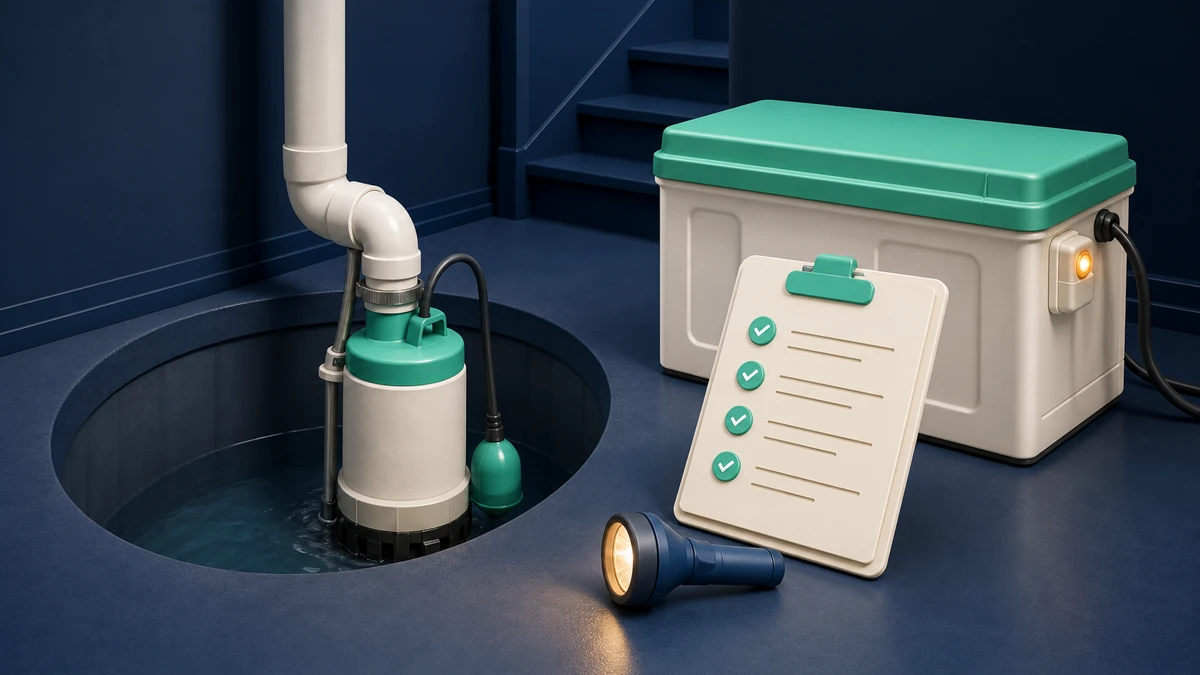
Inspect the pit, float or sensor, check valve, power connection and discharge route; test the pump with water according to the manufacturer’s instructions; and verify that water is carried safely away from the foundation. A backup pump or backup power source can help during outages, but capacity and installation must match the home’s conditions.
What a sump pump can—and cannot—do
A sump system collects water that reaches a designated pit and pumps it away from the building. It can help manage groundwater or drainage that enters the system, but it does not fix every cause of basement moisture. Surface grading, gutters, downspouts, foundation drainage, plumbing leaks and sewer backup require separate evaluation.
Flood insurance and homeowners insurance can also treat water sources differently. Maintenance is not a substitute for understanding the property’s flood and sewer-backup coverage.
Visual inspection checklist
- Remove debris that could obstruct the pump or float.
- Confirm the pump sits upright and the switch moves freely.
- Inspect the power cord, receptacle and approved circuit protection.
- Check the discharge pipe, joints and check valve for leaks.
- Verify that the exterior outlet is open and directs water away from the foundation.
- Look for frozen, crushed or disconnected exterior piping.
- Review the lid and any required sealing for radon or safety purposes.
How to test the system
Follow the manufacturer’s test procedure. A common method is to add water to the pit until the switch activates, then observe whether the pump starts, lowers the water and shuts off normally. Do not run a pump dry unless the manufacturer allows it.
Listen for unusual vibration or cycling and watch for water flowing back into the pit after shutdown. Frequent cycling can signal a check-valve issue, undersized pit, high inflow or discharge problem that needs professional review.
Plan for power failure and pump failure
Heavy storms can create both high water inflow and utility outages. Backup options include battery-powered secondary pumps, water-powered systems where permitted and compatible, generators or other approved power arrangements. Each option has limits involving runtime, pump capacity, maintenance and installation.
Test the backup system separately and replace batteries according to the manufacturer’s instructions. An alarm or connected water sensor can provide warning, but it does not remove the need for a working pump and response plan.
Reduce the water reaching the foundation
- Keep gutters clear and repair overflowing sections.
- Extend downspouts to an appropriate discharge area.
- Maintain grading that directs surface water away where feasible.
- Keep exterior drains and swales open.
- Address plumbing leaks and condensation separately.
Drainage changes can affect neighbors, public systems and local requirements, so major work should be designed appropriately.
A practical maintenance schedule
Perform a basic test before the local wet season, after long dry periods and before a forecast event when safe to do so. Inspect the exterior discharge after freezing weather and after landscaping work. Arrange professional service when the pump is noisy, repeatedly trips a circuit, cannot keep up or shows corrosion or damage.
Use the roof and drainage checklist to review other pathways that can bring water toward the home.
Frequently asked questions
How often should a sump pump be tested?
Follow the manufacturer’s instructions and test before wet seasons, after long idle periods and when a storm is expected and it is safe to prepare.
Does a battery backup replace the main pump?
Usually it is a secondary system with limited capacity and runtime. It should be sized and maintained for the expected risk.
Will homeowners insurance cover sump-pump overflow?
Coverage varies and may require a water-backup endorsement. Read the policy and ask the insurer about the exact water source.
Research transparency
How this guide was prepared
This guide summarizes publicly available U.S. government, regulator or industry-source material listed below. It explains planning concepts and questions to verify; it does not provide a property-specific quote, inspection, coverage decision, legal opinion or tax advice.
Sources and references
- Low-cost projects to protect a home from flooding — Federal Emergency Management Agency
- Homeowner’s Guide to Retrofitting — Federal Emergency Management Agency
- Homeowner natural-hazard preparation resources — Federal Emergency Management Agency
Sources were checked for this guide on July 27, 2026. Policy terms, tax rules, insurance forms, incentives and local requirements can change.
General-information disclaimer
This guide is for general planning only. It is not a quote, policy interpretation, legal advice, tax advice, engineering advice or a substitute for a licensed professional who can review your property and documents.