Quick answer
Start with utility history and a careful walkthrough, then consider a qualified professional assessment when the home has comfort problems, high bills or planned upgrades. A strong report should document current conditions, identify health and safety concerns, estimate improvement effects and rank projects instead of recommending unrelated replacements.
Why an energy assessment can be useful
High utility bills can come from weather, rates, household behavior, equipment condition or the building shell. An assessment helps separate these factors and identify the areas where work is most likely to improve comfort or reduce waste.
It is especially useful before replacing HVAC equipment, adding insulation, remodeling an attic or crawlspace, or installing new windows. Air sealing, insulation and duct changes can alter equipment needs and moisture behavior, so sequencing matters.
What a DIY walkthrough can check
- Review at least 12 months of electric and fuel bills.
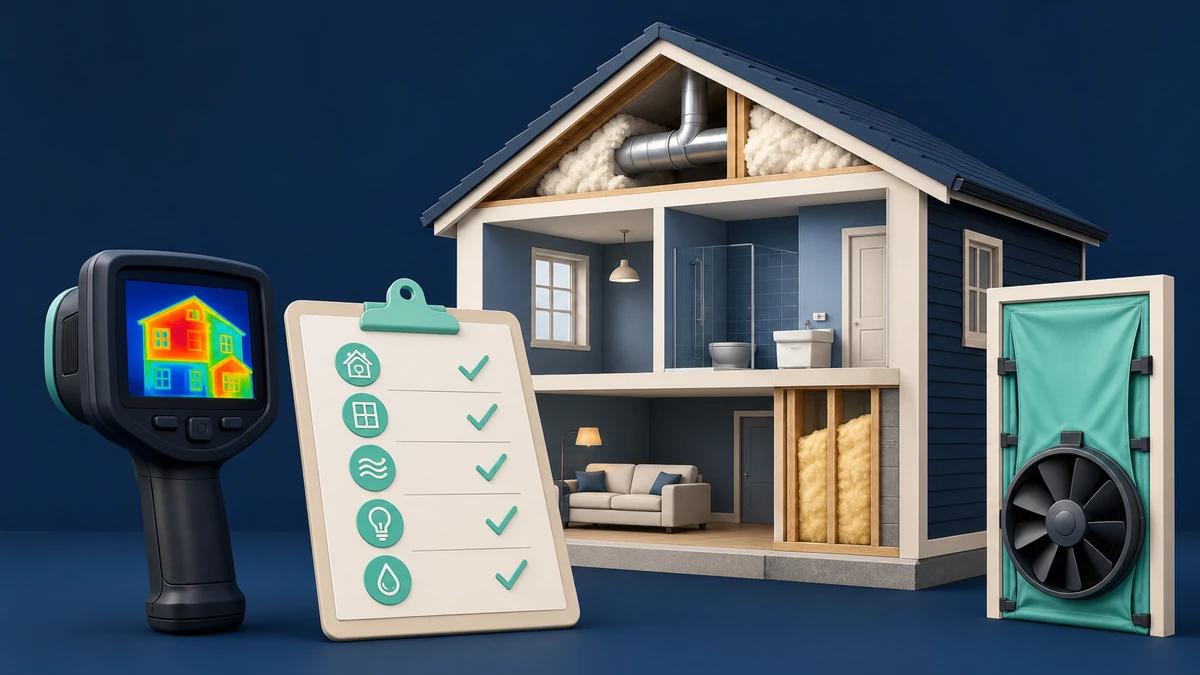
- Look for visible gaps around doors, windows, attic hatches and penetrations.
- Check accessible insulation for gaps, compression or moisture.
- Inspect filters and accessible duct connections.
- Note rooms with persistent temperature or humidity differences.
- Record equipment age, model information and maintenance history.
- Check for unsafe combustion symptoms and stop if professional evaluation is needed.
A DIY check can find obvious issues, but it cannot safely reproduce every diagnostic test or determine all moisture and combustion risks.
What a professional audit may include
A professional may inspect the building enclosure, insulation, HVAC, ducts, water heating, lighting and appliances. Depending on the scope, tools can include a blower door, infrared camera, pressure diagnostics and combustion-safety testing.
Ask what testing is included, what credentials the auditor holds, whether the auditor also sells installation work and whether the report will provide measured findings rather than a generic checklist.
How to read the report
Separate health and safety work from energy upgrades. Then group recommendations by prerequisite, low-cost improvement and capital project. Good reports state assumptions, expected benefits, rough costs or savings ranges and important interactions.
- Priority 1: combustion, moisture, electrical or ventilation concerns.
- Priority 2: air sealing and insulation measures that improve the building shell.
- Priority 3: equipment replacement sized for the improved home.
- Priority 4: optional comfort, resilience or renewable-energy projects.
Turn recommendations into comparable bids
Provide the same audit findings and scope to each contractor. Ask how air sealing will be verified, how insulation depth or coverage will be documented, how ventilation will be protected and what post-work testing is included.
Do not assume the lowest equipment price is the best project. Missing air sealing, poor ductwork or an oversized system can reduce the value of a high-efficiency appliance.
Check incentives carefully
Federal, state, local and utility incentives can change. Verify eligibility, product requirements, contractor rules and application timing before signing a contract. Some programs require approval or an assessment before work begins.
Use the Home Maintenance Budget Calculator to keep energy upgrades separate from the reserve needed for ordinary repairs and replacements.
Frequently asked questions
Is a home energy audit the same as a home inspection?
No. A home inspection is broader and transaction-focused; an energy assessment focuses on energy use, comfort and building performance.
Will an audit guarantee specific savings?
No. Savings depend on weather, rates, installation quality and household behavior. Treat projections as estimates.
Should I replace windows first?
Not automatically. Air sealing, insulation, shading or repairs may rank higher. Use the assessment to prioritize the whole building.
Research transparency
How this guide was prepared
This guide summarizes publicly available U.S. government, regulator or industry-source material listed below. It explains planning concepts and questions to verify; it does not provide a property-specific quote, inspection, coverage decision, legal opinion or tax advice.
If the audit points toward the attic, use the attic insulation warning-sign guide to document depth, gaps and moisture.
Sources and references
- Consumer Guide to Home Energy Assessments — U.S. Department of Energy
- Why energy efficiency matters — U.S. Department of Energy
- Home Energy Score — U.S. Department of Energy
Sources were checked for this guide on July 27, 2026. Policy terms, tax rules, insurance forms, incentives and local requirements can change.
General-information disclaimer
This guide is for general planning only. It is not a quote, policy interpretation, legal advice, tax advice, engineering advice or a substitute for a licensed professional who can review your property and documents.