Quick answer
Check whether the roof is covered at replacement cost, actual cash value or under a roof-payment schedule. Also review separate wind or hail deductibles and cosmetic-damage exclusions. An older roof can affect both policy availability and claim settlement even when the overall dwelling limit looks adequate.
Why insurers ask about roof age
The roof is a major source of weather claims and its remaining useful condition can be difficult to assess from age alone. Insurers may request installation records, photographs, inspection or proof of replacement.
Material, slope, ventilation, installation quality, maintenance and local weather all matter. Do not provide a guessed installation date when documents are available.
Replacement cost versus actual cash value
Replacement-cost coverage generally aims to pay covered replacement cost subject to the policy, deductible and limit. Actual cash value generally reflects depreciation based on age and condition.
Some policies pay actual cash value first and release additional replacement-cost benefits after completed repairs. Roof-specific endorsements can alter this process, so read the entire claim-settlement section.
Roof schedules and cosmetic exclusions
A roof schedule may pay a declining percentage based on age or material. Cosmetic-damage exclusions can limit payment when hail dents metal surfaces without impairing function.
These provisions can produce a different result from the headline dwelling coverage. Ask the insurer for a plain-language example using the roof’s current age.
Inspection and maintenance records
Keep permits, contracts, manufacturer information, warranties, inspection reports and dated photographs. After storms, document conditions from a safe location and use a qualified roofer for close inspection.
Normal wear, deterioration and maintenance are generally different from sudden covered damage. Replacing worn materials is not automatically an insurance claim.
Shop coverage before a crisis
Compare roof settlement, deductibles, exclusions, matching rules and eligibility—not only premium. Ask whether a documented roof replacement changes the rate or requires an updated inspection.
Do not allow coverage to lapse while planning replacement. Lender-placed insurance can be more expensive and may protect the lender more than the homeowner.
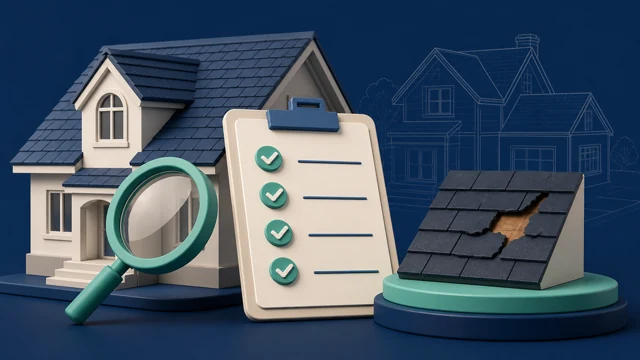
Roof Age and Home Insurance checklist
- Verify documented roof installation age
- Read roof-specific endorsements
- Compare replacement cost and ACV terms
- Calculate wind and hail deductibles
- Keep permits, invoices and photographs
- Update the insurer after completed replacement
Frequently asked questions
Will insurance replace an old roof because it is worn out?
Generally no. Insurance addresses covered losses, while age-related wear and maintenance are usually owner responsibilities.
Can an insurer require roof replacement for renewal?
Underwriting and nonrenewal rules vary by insurer and state. Contact the insurer and state insurance department for the applicable process.
Does a new roof always reduce the premium?
Not always. It may affect eligibility or discounts, but location, coverage and other rating factors also matter.
Research transparency
How this guide was prepared
This guide summarizes publicly available U.S. government, regulator or industry-source material listed below. It explains planning concepts and questions to verify; it does not provide a property-specific quote, inspection, coverage decision, legal opinion or tax advice.
Sources and references
- Roof replacement cost and actual cash value — National Association of Insurance Commissioners
- Homeowners insurance shopping tool — National Association of Insurance Commissioners
- Replacement cost versus actual cash value — National Association of Insurance Commissioners
Sources were checked for this guide on July 27, 2026. Policy terms, tax rules, insurance forms, incentives and local requirements can change.
General-information disclaimer
This guide is for general planning only. It is not a quote, policy interpretation, legal advice, tax advice, engineering advice or a substitute for a licensed professional who can review your property and documents.